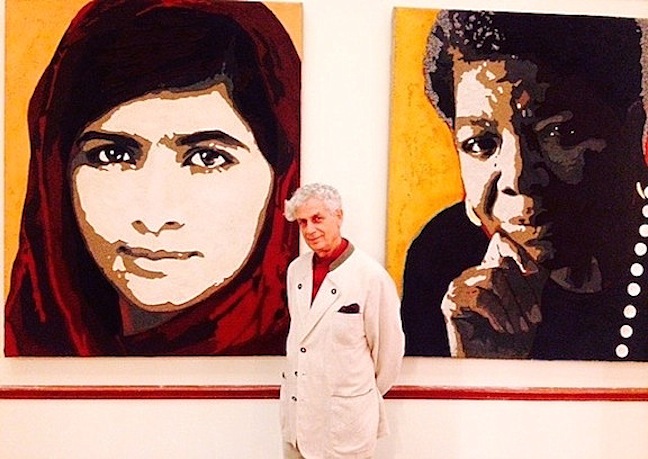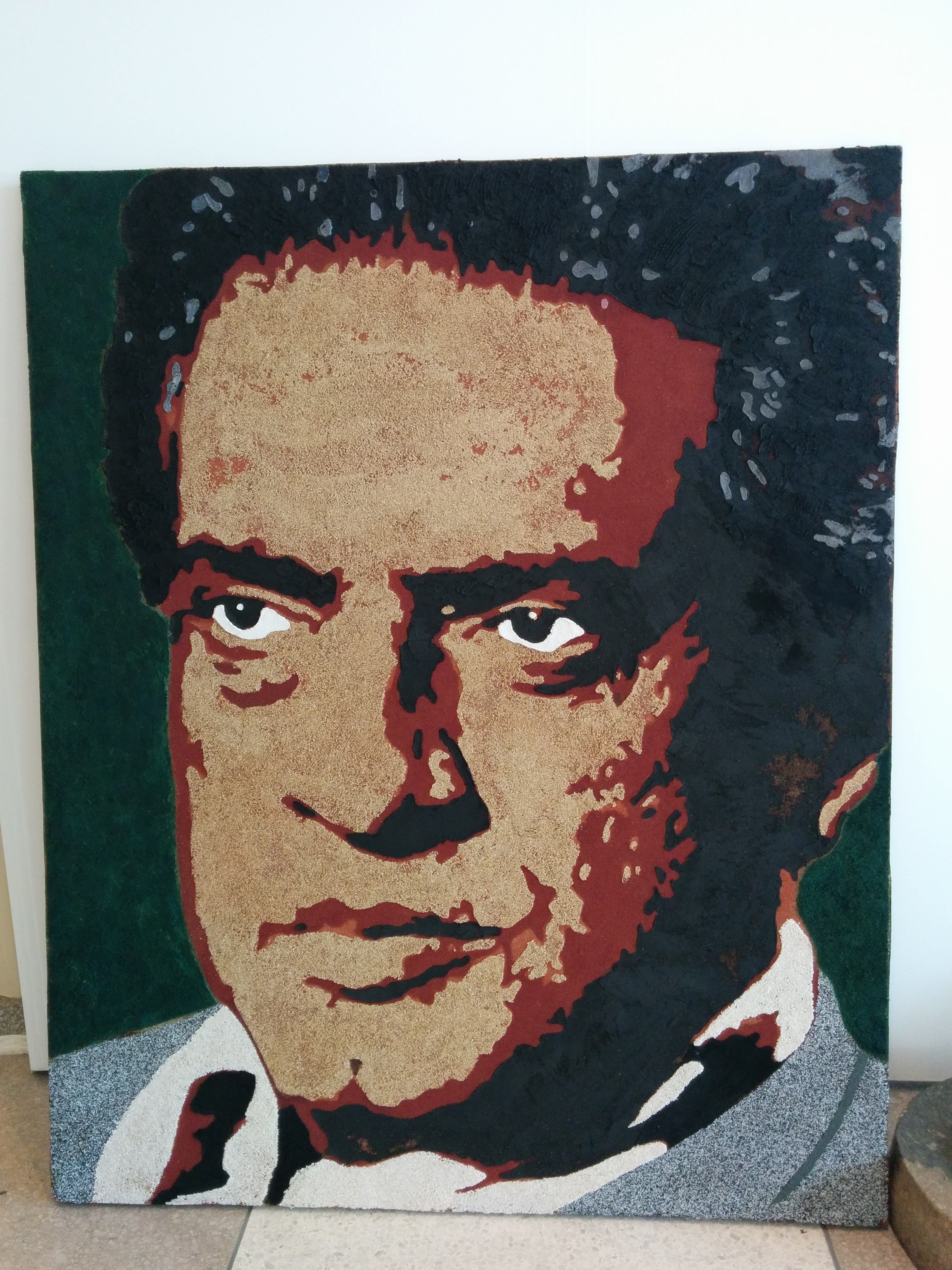
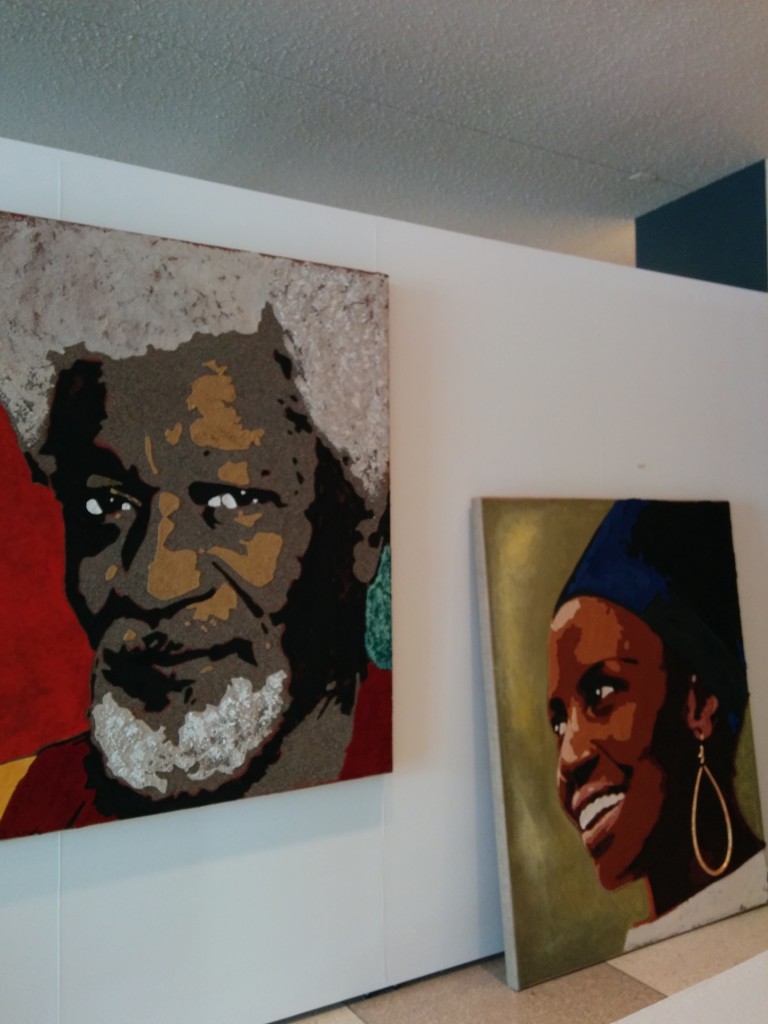
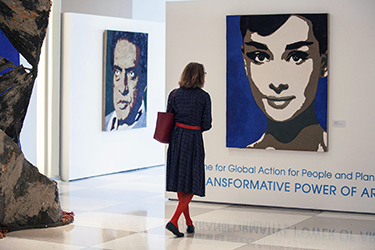
In June 2015, Fabrizio Ruggiero’s monumental fresco portraits were presented at the United Nations Headquarters in New York as part of The Transformative Power of Art, an exhibition dedicated to ethical imagination, human dignity, and cultural responsibility.
The sixteen portraits portrayed artists, thinkers, writers, musicians, and intellectual figures whose work contributed to the common good of humanity — among them Maya Angelou, Audrey Hepburn, Joan Baez, Wole Soyinka, Gong Li, Malala Yousafzai, Edgar Morin, Sebastião Salgado, and Satyajit Ray.

A: Tell me more about The Transformative Power of Art.
F: The exhibition brings together sixteen portraits of artists from different disciplines — writers, singers, photographers, philosophers — and reflects on climate change as a global issue. I also created sculptures using natural materials such as reeds, stone structures, and symbolic totems that act as silent performers, reminding us of what is happening to humanity: war, famine, displacement, migration.
Among the portraits is the French philosopher Edgar Morin. He distinguishes between culture — which emphasizes differences among people — and civilization, which reminds us of what unites human beings. I believe we must focus more on civilization.
A: In India we say “Vasudhaiva Kutumbakam” — the whole world is one family.
F: Exactly. Greek philosophy also speaks of Gaia — the Earth as a living whole. These ideas are deeply connected.
A: I was delighted to see Satyajit Ray among the portraits.
F: Yes. I relate strongly to his cinema. In the 1970s I travelled from Europe to India, and that journey changed my life. It represented freedom — both physical and mental.
A: What was your relationship with India?
F: India became a second home. I studied Sanskrit in Banaras, practiced Theravāda Buddhism in India and Sri Lanka, and later worked on the Global Pagoda Project in Mumbai. My first encounter with this world began when I was very young, listening to Jiddu Krishnamurti in Rome.
India revealed a past still alive in the present. That continuity fascinated me deeply.
A: How was the United Nations exhibition commissioned?
F: In 2014 I curated a permanent exhibition at the National Museum of Cameroon in Yaoundé, dedicated to Pietro Savorgnan di Brazza. His story of peaceful cultural dialogue attracted the attention of several diplomats and United Nations representatives, who later visited my studio in Tuscany and invited me to develop a project for New York.
A: Why do you continue to work in fresco?
F: As a child, my father took me to the National Museum in Naples. I was fascinated by the frescoes of Pompeii — their permanence, their luminosity, their physical presence. Fresco carries responsibility. It cannot be corrected easily. It demands concentration and ethical attention.
I wanted to bring that ancient discipline into contemporary art.
A: Can art truly transform lives?
F: Absolutely. Art carries energy. When a work is made with integrity, it resonates beyond words. People feel it. The portraits at the United Nations moved many visitors. That invisible transmission matters.
Art does not solve problems directly, but it changes perception — and perception changes reality.
.jpg)